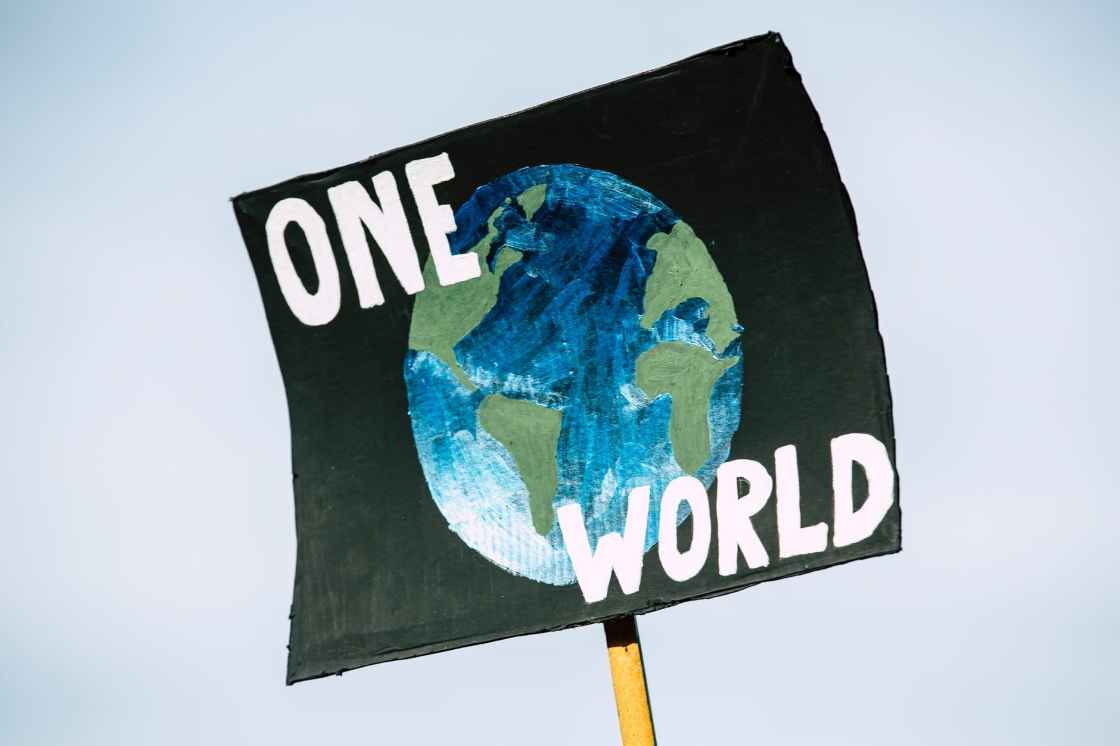
Where to come to understand terminolgy and other stuff.
What causes climate change?
It is driven by the accumulation of emissions in the atmosphere over time.
What is the impact of climate change?
The destruction of the earth’s ecosystems that we rely on. So, more frequent and agressive bushfres, rising seawaters that will see the sea swall small islands and regularly flood others, permenant droughts in some parts so food can not be grown and people are forced to migrate, rising temperatures that mess with the seasons and will make some places unlivable, worsening air quality, huge loss of biodiversity in nature… the list goes on and none of it is good.
When did the world first know about climate change?
Proof of human-made climate change was first discovered in the 1960s by geochemist Charles Keeling, who measured carbon dioxide (CO2) in the earth’s atmosphere and detected an annual rise. However, it’s wasn’t until the 1980s, that the science behind the phenomenon was widely accepted as indisputable and existential. In honour of this recognition, in 1988, US TIME magazine named Man of the Year ‘Plant of the Year: Endangered Earth’.
What is the Paris Climate Change agreement everyone goes on about?
In 2015, following a disastrous international summit in Copenhagen in 2009, 197 nations came together and forged the now historic Paris Agreement.
The legally-binding treaty hinges on some very carefully chosen words, which are: ‘to limit Earth’s temperature rise to well below 2°C, and to pursue efforts to limit the temperature increase to 1.5°C above pre-industrial levels.”
The Intergovernmental Panel on Climate Change, which is a United Nations body made up of a group of independent climate experts from across the globe and is generally the authority on climate change science – it provides policy makers with regular scientific assessments, later said 1.5°C above pre-industrial levels was preferable because 2°C will have significantly more impacts than 1.5°C, such as triggering natural tipping points.
Scientists also said action taken in the next decade will be piviotal because there is a delay between emissions being produced into the atmousphere and them taking effect.
What has the Paris Agreement meant in reality?
Some say[1] the Agreement has bent the trend away from ‘business as usual’, while others[2][i] say the agreement has made no real difference, other than to allow leaders to tell their voters they are ‘taking action’ when their pledges are little more than ‘fig leaves’ for business as usual.
I think the truth is probably somewhere in between because we are seeing unprecedented focus on climate change, in part driven by the Paris Agreement and the public demanding it, but policy and overall action still falls far short from what is required.
In reality, no government pledges and policy add up to achieving the goal of the global agreement.
What does Net Zero carbon emissions mean?
It means getting emissions of all greenhouse gases as low as possible by the target date, with remaining emissions balanced by removals from the atmosphere[1]. Removal of carbon from the atmosphere can be anything from planting trees, to more engineered and controversial solutions such as direct air capture.
Interpretation of net zero varies, however. It may include, or not, international aviation and shipping, as well as offsetting emissions domestically only, or paying for emission reductions in other countries. The UK’s plan includes the former, with domestic offsetting.
However, net zero does not include carbon consumption, but only production. Therefore, it doesn’t include the goods countries import and consume. This essentially means that, for example, if the UK steel industry collapsed tomorrow and we imported all of our steel, technically steel production wouldn’t contribute to our overall emissions but we’d still be using steel, it would just be produced elsewhere.
How far away is the world from achieving the Paris Agreement?
An extensive report published in January 2020 found that based on what countries are actually doing, there is a 97 percent probability of exceeding the 2°C warming. Based on what countries have promised to do, this falls to 90 percent. Only sixteen-countries have national laws consistent with their emission reduction pledges.
In recent years the world has actually gone backwards. After a three-years with stable global emissions, they grew by 1.6 percent in 2017 and were estimated by the Global Carbon Project to have grown a further 2.7 percent in 2018. This year emissions are expected to fall due to the coronavirus pandemic.
What happens if the world fails to meet its targets?
If the 2050 net zero target is not met, countries would be emitting more than their fair share of CO2. If this happens, the scientific projections are clear. Humans are already experiencing the destructive impact of climate change and it will just get worse.
In their book, Christiana Figueres and Tom Rivett-Carnac, the chief orchestrators of the historic Paris Agreement, in their recent book, The Future We Choose: Surviving the Climate Crisis., imagine what 2050 will look like if the world is headed for 3°C warming by 2100, which it currently is.
‘The air is hot, heavy…and clogged with particulate pollution… masks are routinely worn to protect from pollution…The coral reefs have vanished…the ice sheets in the arctic have melted…There’s a surge in extreme hurricanes and tropical storms because of more moisture in the air and higher sea levels…More people are displaced daily…,” they write. “With each new tipping point passed, they [people] feel hope slipping away.”
What is a tipping point?
Tipping point’s refer to ‘ irreversible changes in the climate system.’ Scientists say there are around 15 tipping points, an dthey include melting of the West Antarctic ice sheet, the destruction of the Amazon rainforest, the destriction of the boreal forests (northernmost forests of the globe), and melting of permafrost (ground that continuously remains frozen located on land or under the ocean). Once one of these is breached or destroyed, the release of carbon and other harmful greenhouse gasses into the atmousphere would be extremely aggressive.
Scientific evidence is mounting that these could occur at much lower warming than previously expected, which is extremely concerning, Here is a good article on it: https://www.nature.com/articles/d41586-019-03595-0
[1] Jim Skea, a professor at Imperial College London and Co-chair of Working Group III of the Intergovernmental Panel on Climate Change (IPCC)
[2] Dieter Helm, a British economist and academic, in his new book ‘Net Zero: How We Stop Causing Climate Change.’
Much of this information I researched for a feature on climate change for E&T Magazine which can be read in full here.
 Climate Change Site